
Case Study – YUDA
Consumer-Centricity Starts at Home

BUSINESS UNIT: MEXICO
Has it ever happened that, because you work at Sigma, someone gives you feedback about a product and you don’t know what to do with it?


Where Feedback
Got Lost
At Sigma, employees aren’t just collaborators; they’re also consumers, shoppers, and the voices of the community. Yet despite being surrounded by products and experiences every day, many weren’t sharing the valuable feedback they encountered in a way that reached the company or sparked action.
Employees had no clear path to report comments, ask questions, or share insights they were hearing from friends and family.
The Customer Service team noticed that even though feedback channels existed (primarily phone and email), they weren’t being used as much. Sigma wanted to encourage a more consumer-centric mindset and empower collaborators to act as bridges between the company and its market.
Willing to Speak,
Unsure Where to Go
Collaborators were ready to help, there was no lack of willingness. What was missing was direction.
Each unshared comment wasn’t just data lost, it was a missed chance to help someone, solve a problem or improve the experience.
The challenge became clear: collaborators needed a quick, familiar way to speak up and feel heard.
“I didn’t know who to contact or how to share the feedback I was getting”
“I don’t report anything because I’m not sure where to go or who to talk to.”
“I don’t feel like waiting on the phone.“


Learning Through Testing
With the core concepts in place, the team moved into hands-on experimentation to refine the solution through testing, feedback, and iteration. Four key activities helped shape the final experience:
- Designing the conversation flow: The team built and tested a virtual bot to guide users through common topics, then connect them with a human agent when needed.
- Simulating real interactions: The team tested the bot with collaborators in administrative roles, using realistic scenarios to ensure the experience felt natural and helpful.
- Gathering feedback to improve: Interviews with collaborators helped fine-tune both the bot experience and the tone of the conversation.
- Co-creating with Customer Service agents: The team worked with agents to design response templates, that kept the tone consistent, while still allowing for personalized replies when needed.
One of the biggest challenges was translating the personal touch of a phone call into a messaging environment. While agents initially preferred crafting their own responses, testing revealed a balanced approach: using pre-written answers for frequent questions and switching to custom replies when conversations needed a more personal response.
Designing a Better Way to Listen,
With RACU
The disconnect was clear: collaborators wanted to help, but lacked an easy and visible way to do so. With that challenge in focus, the team turned to the RACU methodology to guide the way forward.
Understanding Before Acting
The journey began by listening to Sigma’s collaborators (through interviews, conversations and observations) to understand how they engaged with the company, what challenges they faced and what kind of support they needed.
This exploration revealed key friction points and opportunities for improvement. From those insights, the team defined three strategic priorities to guide their next steps:
- Connecting existing communication channels to create a more unified experience.
- Exploring simpler ways to interact with consumers and collaborators.
- Learning from collaborator feedback as a starting point for experimentation.
Imagining the Way Forward
With the priorities defined, the team moved into the Ideate step to explore ideas that could meet collaborators’ needs. After brainstorming and refining options, they focused on three key concepts to move forward with:
- Adding the right communication channel: While phone and email support already existed, WhatsApp emerged as the ideal addition. It was familiar, accessible, and already widely used by both collaborators and consumers, making it a natural fit to expand how people connect with Sigma.
- Creating something approachable: To make the new channel feel easy and familiar, the team designed a friendly and recognizable brand. Unlike past efforts, this identity was built to connect with collaborators and encourage interaction, rather than just function as a tool.
- Preparing behind the scenes: Adding WhatsApp meant updating internal systems and routines to support it. The team worked to ensure Sigma could deliver consistent, high quality service through messaging.
A Sign We Were on the Right Track
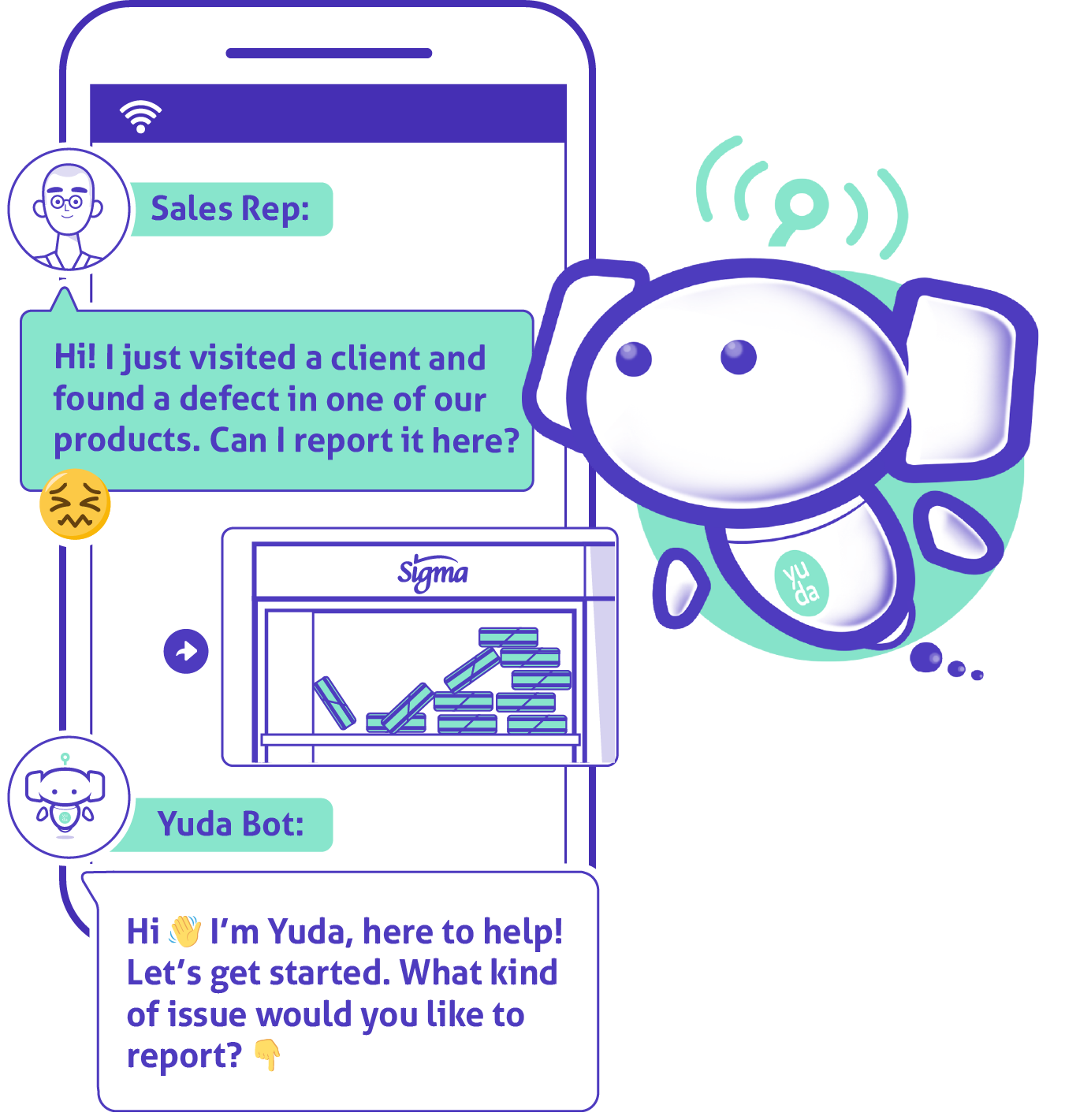
Just as the team was refining the experience internally, an early sign of success emerged. Even before any official communication campaign, sales reps and clients began using the WhatsApp channel on their own. Though they weren’t part of the initial testing group, sales reps quickly adopted the tool simply by saving the customer service number to their phones. It felt natural to reach out through a platform they were already using every day.
For those on the ground, people interacting daily with products and shelves, the channel fit seamlessly into their workflow. The increase in cases and questions confirmed that WhatsApp wasn’t just convenient; it was relevant.

“Just as importantly, this project helped strengthen Sigma’s consumer-centric culture. Making it easier for people to share feedback, and easier for the company to truly respond to it.“
Where Innovation Met Everyday Needs
What began as an experiment quickly became a new standard for how Sigma listens, responds, and connects with its people.
Today, a significant percentage of customer service interactions begin through WhatsApp. Confirming its value as a go-to channel for questions, feedback, and support.
The project also helped redefine the role of Customer Service, positioning it more clearly as the first line of connection with consumers, shoppers, collaborators, and clients. It reminded the team that innovation doesn’t always come from big, disruptive moves. Sometimes, it’s about removing friction and meeting people where they already are.

LEARN MORE